Save money and win more projects – by understanding your structural engineer’s design and questioning it.
Learn about steel, concrete, masonry and timber from a structural engineer’s design perspective.
Learn how steel beams, concrete foundations and other elements are sized. Save money by asking the right questions of your engineer.
Learn how it’s sized. Then question it.
Steel, concrete, masonry and timber are our core structural design topics, each taught the way an engineer designs it: loads first, then the checks that set the size.
 Levels 1–3
Steel
How it’s sized: Load build-up, bending, shear, deflection and lateral restraint set the section. On most domestic spans, deflection governs.
Ask your engineer
- Is the beam restrained by the floor joists? If so, can a lighter section work?
- Does the roof load really come onto this beam, or is it carried elsewhere?
 Levels 1–3
Concrete
How it’s sized: Wall load and the soil’s bearing capacity set the width. Soil type, trees and drains set the depth.
Ask your engineer
- What bearing capacity has been assumed, and would a trial pit justify a narrower foundation?
- Is the depth set by a specific tree? Which one, and how far away is it?
 Levels 1–3
Masonry
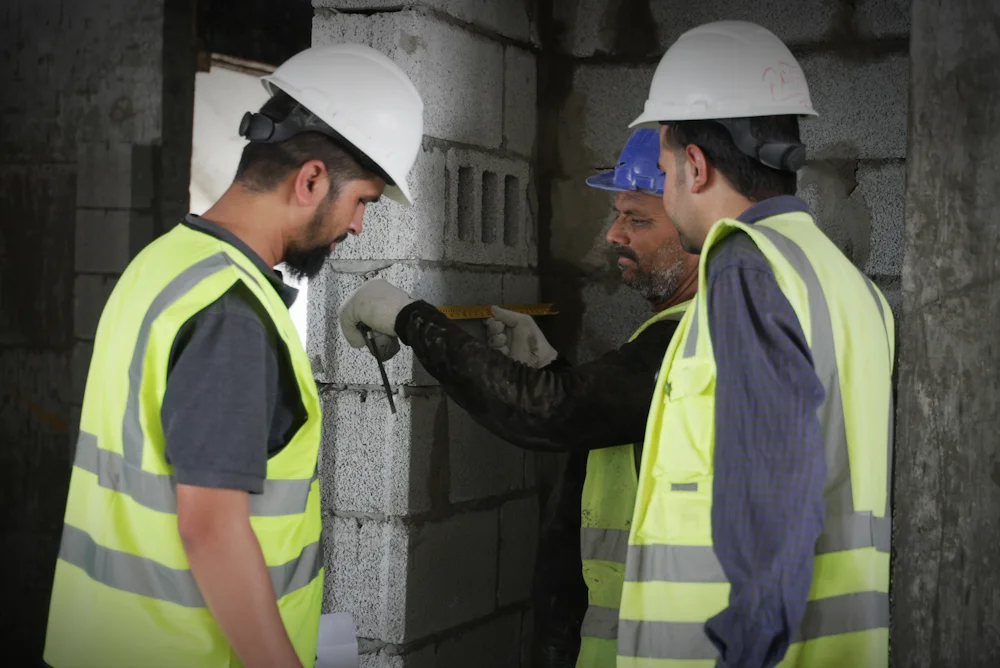
How it’s sized: Block strength, wall thickness, slenderness and restraint set the capacity. Concentrated loads at beam ends usually decide whether a padstone is needed.
Ask your engineer
- Is a padstone really needed here, or can the blockwork take the bearing?
- What wall length has been assumed for this pier, and does it need to be that wide?
 Levels 1–3
Timber
How it’s sized: Span, spacing, load and strength class set the size. For floors, deflection and vibration usually govern.
Ask your engineer
- Would C24 instead of C16 avoid a deeper joist or a steel?
- Can the joists span the other way?
Questions that change your price
Could you ask your engineer these, and understand the answers?
Every one of these questions affects your build cost or your tender price. Our courses teach you to ask them and judge the answers, across steel, concrete, masonry, timber and much more. New courses are added regularly.
See all courses- ‘What loads have you assumed, and are any of them more than this job actually needs?’
- ‘Is this steel restrained by the joists? Could a lighter section work?’
- ‘Do I need a new steel post and foundation, or can the beam bear on a padstone?’
- ‘What ground bearing capacity have you assumed? Would a trial pit let us use a narrower foundation?’
- ‘Is the foundation depth set by a tree? Which one, and how far away is it?’
- ‘Would trench fill be cheaper than a strip foundation on this site?’
- ‘Can the existing wall take this load, or does it really need rebuilding?’
- ‘Would C24 timber instead of C16 avoid a deeper joist or a steel?’
- ‘What temporary works and propping does this design need, and who is designing them?’
- ‘Which details won’t be confirmed until opening up, and what could change my price?’
Save on every job. Win more of them.
Structural competence pays twice: lower build costs on the jobs you have, and more clients choosing you for the jobs you want.
Save money
Spend less on every job.
- Challenge over-design before you order the steel, the timber or the concrete.
- Avoid redesign rounds and the extra fees and programme delay that come with them.
- Price the structure accurately at quote stage instead of padding it with contingency.
- Cut site errors, call-backs and remedial work.
Win more clients
Show you’re competent. Get chosen.
- Put your Loadpath certificate on quotes, tenders, your website and your van.
- Explain the structure to homeowners in plain terms. Clients pick the builder who understands the job.
- Evidence your competence under the Building Safety Act dutyholder regime.
- Stand out from builders who can only wait for the engineer’s answer.
Builder competency is changing
Get ahead of the curve.
Competence is no longer something a builder simply claims. It is becoming something you are expected to show, and the builders who can evidence it first will have the advantage when clients, building control and main contractors start asking.
- Since October 2023The Building Safety Act dutyholder and competence duties apply to all building work in England, domestic jobs included. Anyone carrying out the work must have the skills, knowledge, experience and behaviours to do it in line with the Building Regulations.
- December 2025Government published proposals for a single construction regulator, including licensing for principal contractors on higher-risk buildings and formal competence standards across the built environment.
- Coming nextExpect clearer competence standards and more requests for evidence. A Loadpath certificate is written proof of structural understanding, at a stated level, that you can show today.

What structural competency means at each level.
Most topics run at Levels 1, 2 and 3. Start where you are and work up. Pass the assessment and your certificate names the topic and the level.
You’ll be able to:
- Read structural drawings, schedules and calculation summaries
- Explain how load travels from roof to ground through each element
- Know what section sizes, timber grades and concrete grades mean
- Recognise when a change needs an engineer, and what to send them
You’ll be able to:
- Build up the loads on a beam, joist, wall or foundation
- Follow how bending, shear, deflection and bearing set the size
- Check an engineer’s calculation against what is on site
- Spot errors, missing information and over-design before you buy
You’ll be able to:
- Compare structural options for cost, programme and buildability
- Plan temporary works and propping for alterations
- Question your engineer with specific, technical alternatives
- Take responsibility for structural competence on your jobs
Built for the people who work alongside engineers.
The same knowledge pays off differently in every role. Tell us yours when you register and we’ll tailor what we send.

Builders & contractors
Check the steel, the foundations and the joists before you buy them, and quote with confidence.

Architects
Design with the structure in mind from the first sketch.
Training a whole team?
Ask about team training
Property investors
See the structural cost before you exchange.

Surveyors & PMs
Advice that holds up technically.
Get ahead of the competency changes.
Registering isn’t a commitment. You’ll get outlines, dates and pricing in writing, and you’ll be first to hear when new topics open.
Register your interest